







A triple mandate built into every dollar deployed
IGV Housing is engineered as an institutional ESG platform by design, not as a marketing overlay on a conventional housing product.
Three converging pillars produce measurable climate, social, and sector-transformation outcomes per dollar deployed, substantiable under SFDR Article 8/9, GRI, and SDG frameworks.
Decarbonise
Democratise
Industrialise
Structural, not aspirational
Each pillar is grounded in product structure, not in disclosure choice. The Facility produces each outcome as a by-product of its credit thesis, not as an additional commitment.
Every dollar deployed funds Step 4 / Net-Zero-ready, factory-built housing through IGV Build Systems, at the upper end of the BC Energy Step Code band.
- Step Code 4 / Net-Zero-ready specification on every unit
- Reduced embodied carbon through factory-built construction
- Minimised material waste and on-site construction emissions
- Step Code progression embedded in the product profile
Every funded project enters the IGVhope pathway, placing households on a structured route to full ownership at a price fixed at entry.
- Affordability terms fixed at entry and protected across the full pathway period
- Designed for households locked out by deposit requirements and mortgage qualification timing
- Ownership completed at materially lower debt levels than conventional entry
- Measurable intergenerational wealth outcomes per household placed
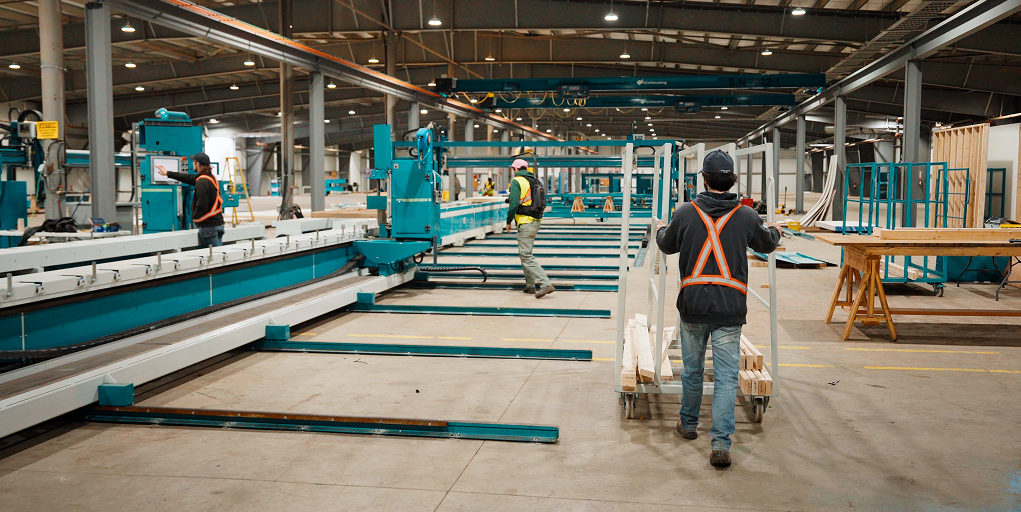
Every project catalyses the industrial-scale modernisation of Canadian housing delivery, building the manufacturing capacity Canada needs to close its 2.6-million-unit supply gap.
- Manufacturing capacity build-out in Canadian advanced housing
- 50% timeline compression vs conventional construction
- Workforce transition to controlled factory environments
- Supply chain modernisation through standardised product profiles
One home. One family. One generation changes everything that follows.
IGVhope exists for one reason: to change the lives of families who are ready to own a home but cannot overcome the barriers the current system places in their way.
Across Canada, homeownership for people aged 25 to 29 has declined from 44% to 36% in a single decade. These are not people who cannot afford housing. They are people the timing and structure of the current system has left behind.
The HOPE pathway fixes today's purchase price, allowing households to move in now and complete ownership at Year 10 at significantly lower debt levels than a conventional purchase today. For many, this is the difference between entering the property market and being permanently excluded from it.

Every dollar deployed through the IGV Capital Facility is a dollar that moves a household closer to ownership. That is not a secondary outcome. It is the primary purpose of the entire platform.
- SDG 1: No Poverty — secure tenure and freehold ownership at Year 10
- SDG 10: Reduced Inequalities — asset accumulation for structurally excluded middle-income households
- SDG 11: Sustainable Cities — homeownership pathways in communities that need housing supply
The triple mandate produces outcomes that conventional debt instruments cannot.
This positions the Facility for institutional capital pools that ESG-only narrative cannot reach.
European and globally domiciled institutional capital with SFDR Article 8 ("promoting" sustainability characteristics) and Article 9 ("sustainable investment objective") classifications can deploy against the Facility's measurable triple-mandate outcomes.
Long-duration Canadian pension capital (CAD $2.5 trillion) and Australian superannuation (AUD $4 trillion+) carry explicit ESG-aligned, infrastructure-style housing mandates that the Facility's structured outcomes are designed to satisfy.
Sovereign Mandates
Gulf institutional capital operating under Vision 2030 frameworks with explicit housing, sustainability, and economic-diversification objectives finds direct mandate fit in the Facility's combined climate-and-social profile.
Impact-mandated allocators with explicit impact targets find the Facility's quantifiable per-home social and climate outcomes substantiable rather than narrative-only. Insurance balance sheets with long-duration liability profiles find natural alignment in the platform's stabilised cash flow.
The ESG case is structured to be substantiable, not asserted.
Every claim the Facility makes about a project is verified by an external party with independent professional accountability. Reporting infrastructure includes:
- Per-project environmental performance data (Step Code certification, embodied and operational carbon profiles)
- Per-project social outcome data (HOPE pathway placement, affordability metrics, longitudinal ownership outcomes)
- Per-project industrialisation data (manufactured content, productivity benchmarks, supply chain participation)
- Aggregated Facility-level reporting for institutional investor mandate-compliance use
- Independent third-party certification at the project level (Step Code, accessibility compliance, CMHC scoring)
Article 8 and Article 9 aligned — measurable sustainability outcomes per dollar deployed
GRI 413 (community development), GRI 203 (indirect economic impacts), GRI 302 (energy)
SDG 1 (No Poverty), SDG 8 (Decent Work),
SDG 9 (Industry), SDG 11 (Sustainable Cities)
Climate disclosure aligned — Step Code 4 / Net-Zero-ready certification provides third-party verification